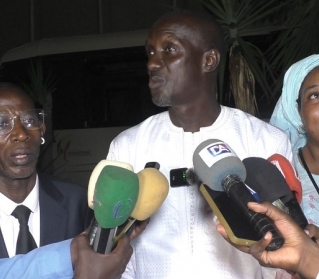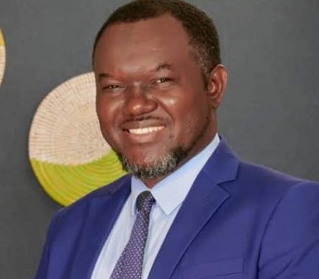


 Kaw Oumar Sarr
The New Generation of African Leadership, Between Local Vision and Global Responsibility
 Based on extensive briefings and analysis from Samuel Shay, Entrepreneur and Senior Economic Advisor to the Abraham Accords Treaty
Across Africa, the question of leadership has become the defining challenge of the twenty first century. The continent holds vast potential: natural resources that rival any region on earth, fertile land, young populations eager for opportunity, and strategic geography that connects global markets. Yet the most persistent obstacle remains political instability driven by outdated models of governance.
In an exclusive series of conversations, Samuel Shay presents a sharp and comprehensive assessment of the crisis, alongside a forward looking model for a new era of African leadership. Shay argues that the future of the continent depends on the rise of a responsible, transparent, and modern generation of leaders who can replace the cycle of coups, autocratic regimes, and decades long rule by entrenched elites.
His conclusions are direct. Without a structural shift in the character of leadership, economic development will remain blocked, foreign investment will remain limited, and African citizens will continue to suffer from systems that do not serve their interests.
A Continent Trapped in Cycles of Instability
Shay begins by addressing the staggering frequency of coups across the continent. On average, between five and eight coups occur each year. Some are initiated by military chiefs who disagree with the elected president. Others are driven by defense ministers or security commanders who decide they can govern better or enrich themselves faster. The result is a recurring pattern: removal of a sitting president, promises of elections, and then years of delay or abandonment of the democratic process.
This pattern produces deep consequences.
Citizens lose trust in democratic institutions.
Investors avoid countries with unpredictable leadership.
Regional alliances weaken because no one can rely on political continuity.
Government ministries cannot build long term plans because leadership changes abruptly.
Corruption increases because power is viewed as a prize rather than a responsibility.
Shay notes that these cycles have turned many African states into isolated actors in the global system. They often do not participate in international initiatives. They struggle to form economic partnerships. They are viewed by global markets as risky environments, which pushes them out of global supply chains and cooperative frameworks.
Autocratic Rule and Economic Paralysis
A significant part of the crisis, according to Shay, comes from the fact that many African leaders hold power for decades without genuine elections. Some rulers begin their terms with promises of reform but evolve into authoritarian figures protected by military or security forces. In several countries, leaders have been in office for thirty or even forty years.
The consequences are visible everywhere.
Infrastructure remains outdated or nonexistent.
School systems fail to prepare young people for modern employment.
Healthcare collapses under poor management.
Corruption becomes institutionalized.
Public funds are siphoned for personal benefit.
Shay describes it as a paradox. Countries filled with oil, gas, minerals, fertile land, water, and young manpower remain impoverished. They are rich in potential but poor in outcomes because leadership does not prioritise national development.
A Rising Generation With New Expectations
Despite the challenges, Africa holds one of the strongest demographic advantages in the world. In many countries, more than sixty percent of the population is under the age of thirty. This generation is digitally connected and socially aware. It watches global developments online. It sees how stable societies grow, how accountable leadership operates, and how innovation changes economies.
Shay emphasises that this generation is no longer willing to accept old systems of fear and stagnation. Their expectations include:
real elections with real competition
transparency in government decisions
independent courts that serve citizens rather than politicians
credible strategies for job creation
improved public services and modern infrastructure
leadership that responds to the needs of the population
Shay believes that the rise of this generation is the most promising force for change in the entire continent.
A Historic Opportunity for Leadership Reform
The central question Shay raises is simple: has the time come for Africa to adopt a new leadership model that reflects global standards and citizen expectations?
According to his analysis, the answer is clear. The future of the continent depends on a profound transition from leadership based on personal power to leadership based on public service.
Shay outlines several reasons why this transition is now urgently necessary.
1. The global economy requires stability
Investors will not bring capital into nations that experience regular coups, political assassinations, or sudden regime changes. Without stability, even the strongest natural resources remain underdeveloped.
2. International partners expect accountability
Major development institutions, financial bodies, and partner nations prefer to work with states that respect democratic norms. Cooperation is impossible when decision making relies on military force.
3. Africa’s economic potential is enormous but underutilised
To unlock this potential, leadership must shift from extraction and survival to vision and long term planning. Without this shift, Africa will remain a supplier of raw materials instead of a producer of value.
Practical Pathways to a New Generation of Leadership
Shay proposes several strategic directions that could reshape the political landscape across the continent.
1. Leadership academies for the next generation
Africa needs institutions that train young leaders in economics, public management, diplomacy, ethics, law, innovation, and governance. Shay believes the future lies in educating leaders before they enter power.
2. Women in leadership positions
Shay highlights data showing that countries with greater female representation in leadership tend to enjoy more stability, lower levels of corruption, and stronger social cohesion.
3. Limiting presidential terms
Democracy cannot survive when presidents stay in office for decades. Term limits are essential to prevent authoritarian concentration of power.
4. Strengthening state institutions
Independent courts, professional civil service systems, and reliable central banks create stability that outlasts any single leader. Shay sees institutional strength as a fundamental requirement for reform.
5. Building export oriented economies
When a country creates jobs, provides training, and supports innovation, the risk of political upheaval decreases. Economic opportunity is a stabilising force.
6. Responsible international engagement
Partnerships with stable countries can help build administrative capacity, train new leaders, and create incentives for clean governance.
7. Strong civic society and professional unions
Citizen organisations play an essential role in protecting democratic standards and demanding accountability from leaders.
8. A cultural shift from power to service
Shay argues that leadership must be reframed as public responsibility rather than personal reward. This shift must begin early in the education system.
The Call for a New African Leadership Era
In Shay’s view, Africa stands at a crossroads. It can remain within cycles of instability or embrace a new generation of leaders who bring accountability, transparency, and vision. Economic development, technological advancement, and regional cooperation all depend on this transformation.
“Africa has the potential to become one of the most important economic regions on earth” Shay states. “But without stable, ethical, and forward thinking leadership, the continent will continue to face crises that prevent it from reaching its true promise.”
The young generation is ready for change. Civil society is demanding it. International partners are prepared to support it.
The moment has arrived for Africa to redefine what leadership means and who is worthy of holding power.

Original article by Samuel Shay, developer and economic advisor for the Abraham Accord treaty.
Tel/watsApp +972-54-2044177
Le Partage de l'info