

 Kaw Oumar Sarr
Pourquoi le continent le plus riche du monde demeure dans la pauvreté, selon Samuel Shay .Africa at the Breaking Point: Samuel Shay Explains Why the World’s Richest Continent Still Lives in Poverty and Chaos.
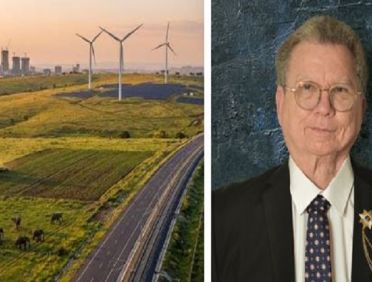 Analyse spéciale de fin 2025
À la fin de l’année 2025, l’Afrique se trouve à un carrefour historique, confrontée à une crise sans précédent malgré ses immenses richesses naturelles et sa jeunesse dynamique. Entre coups d’État répétés, aggravation de la pauvreté et déstabilisations politiques, cette année a confirmé l’impasse dans laquelle se trouve le continent. Pourtant, paradoxalement, l'Afrique demeure le berceau mondial des ressources naturelles et abrite la population la plus jeune du globe.
Dans un entretien approfondi, Samuel Shay, entrepreneur et conseiller économique principal dans le cadre des Accords d’Abraham, offre une analyse percutante : l’Afrique ne fait pas face à ses défis à cause d’un manque de ressources, mais à cause de l’incapacité de ses dirigeants à reconnaître la réalité et à saisir les opportunités de transformation.
Une richesse inexploitable par une gouvernance défaillante
Shay insiste : "L’Afrique est le continent le plus riche en ressources naturelles : cobalt, cuivre, pétrole, gaz, uranium, diamants, terres agricoles… et surtout une jeunesse en pleine croissance. Pourtant, ces atouts ne se traduisent pas en prospérité. La cause principale, selon lui, est une gestion irresponsable et une gouvernance défaillante : "Si les dirigeants comprenaient le potentiel de leur jeunesse, le continent ne serait pas condamné à la survie permanente."
Il souligne toutefois qu'il ne faut pas attendre des investissements étrangers pour amorcer le changement. La clé réside dans une mobilisation locale, une gouvernance responsable, et le courage de lancer des réformes structurelles. La richesse est déjà présente dans la terre, la population et la jeunesse, il s’agit maintenant de l’exploiter intelligemment.
Une année marquée par l’instabilité et le déni
2025 a été marquée par une série de coups d’État dans plusieurs pays — Niger, Soudan, Gabon, Burkina Faso — révélant une dégradation profonde des institutions. Selon Shay, le problème est psychologique : "Les dirigeants africains considèrent encore l’instabilité comme normale, la crise comme une part de leur identité nationale."
Les discours officiels parlent de croissance et de prospérité alors que la majorité des populations ne dispose ni d’eau potable, ni d’électricité. La dissonance entre la réalité et la discours officiel constitue un danger majeur pour l’avenir immédiat.
L’échec de la diplomatie à Washington : un symbole du problème
L’une des illustrations de cette crise de gouvernance fut la réunion à la Maison Blanche consacrée au programme Minerals for Development, destiné à stimuler l’infrastructure et le développement industriel en Afrique.
Shay décrit une occasion manquée. "Les dirigeants africains sont venus avec arrogance, des exigences incohérentes, au lieu de bâtir de véritables partenariats." La rencontre de trois jours s’est résumée en trente minutes, laissant un sentiment d’embarras et d’opportunité perdue. Cela reflète, selon lui, une difficulté fondamentale : la difficulté des dirigeants à faire preuve d’humilité et de responsabilité face à leur propre pays.
L’espoir de la jeunesse, pourtant seul véritable moteur
Plus de 60 % de la population africaine ont moins de 25 ans. Pour Shay, cette statistique doit devenir un appel à l’action.
"C’est cette jeunesse connectée, entrepreneuriale et consciente de ses possibilités, qui peut transformer tout le continent." Si les leaders prennent conscience de cette force et lui donnent le pouvoir, l’Afrique pourrait devenir un pilier économique mondial dans les décennies à venir.
Les Accords d’Abraham, une voie prometteuse
Une piste souvent négligée est le rôle croissant des Accords d’Abraham, qui réunissent États-Unis, Israël, pays du Golfe et, potentiellement, l’Afrique.
Selon Shay, "ces accords créent une architecture économique intégrée, reliant énergie, logistique, agriculture, fintech et innovation."L’Afrique, acteur manquant dans cette alliance stratégique, pourrait en devenir un partenaire clé. Cela repose sur une coopération mutuelle, non néocoloniale, basée sur la stabilité et la valeur partagée.
Vers 2026 : un changement indispensable
Pour Shay, l’année 2025 doit servir d’avertissement, mais aussi d’opportunité.
"L’Afrique n’est pas victime du monde, mais d’une gouvernance qui refuse d’évoluer."
Ses recommandations pour 2026 :
- adopter une gouvernance responsable et transparente,
- prioriser le développement économique plutôt que la recherche de l’ego politique,
- renforcer les partenariats avec les États-Unis et le Golfe via les Accords d’Abraham,
- mobiliser la jeunesse pour conduire le changement,
- réorienter les richesses minières vers le développement national plutôt que vers une élite privilégiée.
"Le potentiel est immense. La seule question est si les dirigeants sont prêts à saisir cette opportunité", conclut Shay.
Pour lui, 2025 a été un avertissement ; 2026 doit être le tournant. L’Afrique a conscience de ses possibilités, et c’est désormais à ses dirigeants et à sa jeunesse de décider si elle veut franchir la porte de l’avenir.
L’Afrique, continent riche mais meurtri par la mauvaise gestion et l’instabilité, doit changer de cap. La jeunesse, ses ressources et des partenariats stratégiques comme ceux permis par les Accords d’Abraham, peuvent catalyser un renouveau. La clé du futur réside dans la gouvernance et la capacité à visionner un avenir audacieux et responsable.
Special End of Year Analysis: Africa 2025
Based on an in-depth interview with Samuel Shay, Entrepreneur and Senior Economic Advisor to the Abraham Accords Treaty
Africa closes 2025 at a moment that is both historic and deeply troubling. No other continent experienced so many coups this year. No other region saw poverty, food insecurity, and state fragility expand at such a rapid pace. Yet paradoxically, no region on earth possesses greater natural wealth or a younger, more promising generation.
In an extensive conversation with Samuel Shay, one of the leading architects of cross continental development programs, a sharper and more uncompromising picture emerged: Africa is not failing because it lacks resources. Africa is failing because leadership refuses to acknowledge the realities on the ground and rejects opportunities that could transform the entire continent.
The richest continent living in a state of permanent crisis
Shay opens with a point he repeats often: Africa is the wealthiest continent in the world in terms of natural resources.
Gold, cobalt, copper, oil, gas, uranium, iron ore, diamonds, vast agricultural land, and a population of nearly one billion people under the age of thirty.
“Africa does not lack anything except responsible management,” Shay states. “If the leadership understood the potential of the young generation, the continent would not be in constant survival mode.”
According to Shay, Africa does not need foreign money in the initial phase. What it needs is local mobilization, local governance, and the courage to launch internal reforms. The resources to build a healthy economy already lie in the soil, in the cities, and most importantly in the youth.
“Foreign investment will come later,” Shay adds. “But Africa can ignite its own economy on its own terms.”
2025: the year of coups and the year of denial
From Niger to Sudan, from Gabon to Burkina Faso, 2025 was another year in which military takeovers overshadowed democratic processes.
But for Shay, the deeper issue is psychological.
“African leaders still behave as if instability is normal,” he says. “They treat crisis as if it is part of national identity. Meanwhile entire generations grow up with no stability, no economic horizon, and no trust in the system.”
Shay argues that leaders across the continent have adopted a rhetoric that does not match their reality. “You hear speeches about growth, prosperity, and international influence from countries that cannot provide clean water or electricity for half their population. This gap is the biggest danger.”
Washington: the moment that exposed a continental problem
One of the most revealing events of the year occurred in the White House. President Trump extended a strategic invitation to African heads of state under the Minerals for Development initiative, a program intended to build infrastructure, energy grids, and industrial zones through fair resource agreements.
Shay was briefed in detail on several of those meetings.
His assessment is blunt.
“This was a once in a lifetime opportunity for African leaders,” he explains. “A real strategic window. But instead of discussing partnership, some arrived with arrogance and demands that made no sense.”
One meeting that was planned for three days ended after thirty minutes.
“It was embarrassing,” Shay says. “Trump expected seriousness. Instead he heard excuses, unrealistic expectations, and political lecturing from leaders whose countries face hunger and chaos.”
For Shay, this episode was not an isolated diplomatic failure. It was a symptom of a deeper disease: leaders who refuse to look honestly at the state of their nations and who miss historic opportunities because they cannot shift from political ego to economic responsibility.
The young generation: Africa’s only real hope
More than 60 percent of Africa’s population is under 25. To Shay, this is not a statistic. It is a call to action.
“If the current leadership does not step aside or adapt, the young generation will pay the price. But if Africa empowers this generation, the continent will lead the global economy in the coming decades.”
Shay emphasizes that this generation is digitally connected, entrepreneurial, and globally aware.
“They know what is possible. They are not willing to accept excuses. They demand results.”
The Abraham Accords: Africa’s strongest doorway to renewal
When asked about realistic pathways forward, Shay points to a framework that Africa still has not fully explored: the economic architecture developing around the Abraham Accords.
For the first time, the United States, Israel, and the Gulf states are building a joint economic system that integrates energy, logistics, agriculture, water infrastructure, fintech, education, and advanced technology.
“Africa is the missing partner,” Shay says.
“Gulf capital, American markets, Israeli innovation, and African resources could create the strongest development ecosystem in the world. This is not theory. This is practical, immediate, and achievable.”
Shay stresses that this collaboration is not neo colonial and not top down. It is an invitation to equality based on shared value.
“What Africa needs is stable partners. The Abraham Accords offer that stability.”
Looking toward 2026: time to stop repeating mistakes
Shay concludes the interview with a message that is both hopeful and severe.
“Africa is not a victim of the world,” he says. “Africa is a victim of leadership that refuses to evolve. But the moment the mindset changes, the continent will enter a new era.”
His vision for 2026 is clear:
adoption of responsible and transparent governance
prioritization of economic development over political ego
partnership with the United States and the Gulf states through the Abraham Accords
unlocking the power of the young generation
redirecting mineral wealth into national development instead of elite consumption
“If Africa takes these steps,” Shay asserts, “it will become one of the most powerful economic blocs of the twenty first century. The potential is unlimited. The only question is whether the leadership is ready.”
2025 offered warnings.
2026 offers possibilities.
And in the words of Samuel Shay:
“The door to Africa’s future is wide open. Now the continent must choose whether to walk through it.”
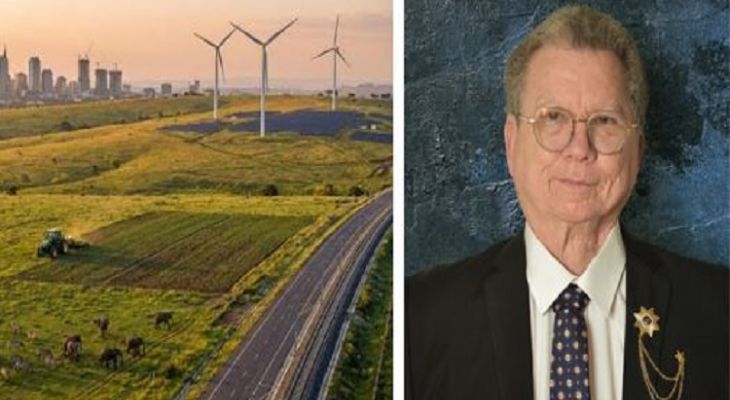
Original article by Samuel Shay, developer and economic advisor for the Abraham Accord treaty.
Tel/watsApp +972-54-2044177
Le partage de l'info